


Why being sensitive is the ultimate tactical edge
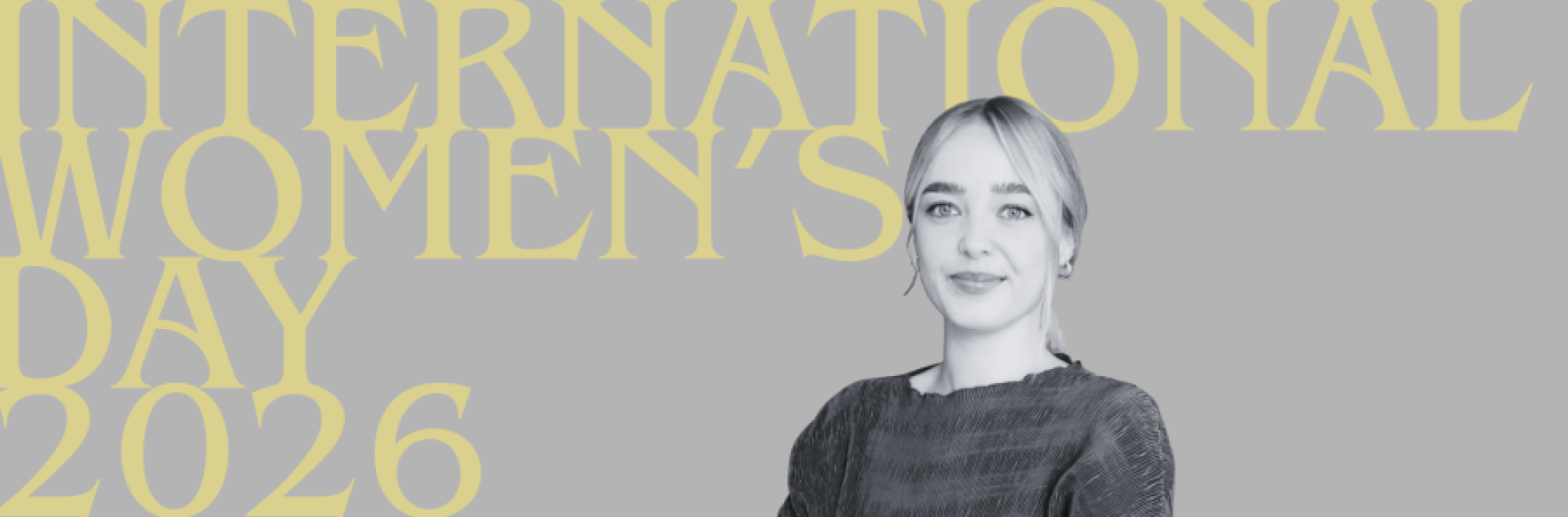
For as long as I can remember, the word ‘sensitive’ has been pinned to me and left me reeling in many points of my life and career.
As a child, this manifested as a deeply stressful emotional workload regarding my teddy bears; I was managing a complex web of personalities and interpersonal politics, gripped by guilt if I played with the blue rabbit too much and convinced that the tiny bear whom I picked off a Christmas tree decoration on the shelf was watching us, bereft. Naturally, I spent my evenings rotating them at different intervals for fairness.
By the time I entered the world of academia and eventually PR, I had already learned to view my sensitivity as somewhat of a flaw.
I spent a long time trying to iron out the creases of being a big ‘feeler’ (ergh), and was convinced that if I just became a bit more detached and simply cared less, then I’d finally be taken seriously in a room full of people speaking in spreadsheets.
It’s no coincidence that this same label - and indeed insinuation - is often used as a critique of women in the workplace.
We’ve all seen (and I’m sure read about) the double standard: when a male counterpart is blunt, impatient, or flashes a bit of ego, it’s framed as drive or passion. But when a woman is attuned to the emotional temperature of a room, an idea, or a person, she’s often labelled as being too sensitive.
It’s easy for women to be deceived into believing that being sensitive means that you lack the grit for the sharp corners of agency life. But this International Women’s Day, I want to stress that what I used to see as a vulnerability is, in fact, my most significant professional asset; I’m actually embarrassed that I used to be embarrassed by it.
Without the emotional intelligence that comes with being ‘sensitive’, I’d be both bored with, and pretty awful at, my job.
As much as I am now joining a litany of (mostly) women who have attested to the power of emotional intelligence and rejection of its regulation to the "soft skills" bucket, it needs to be said again and again.
Being ‘sensitive’ or rather, emotionally intelligent, is a high-fidelity guide—and it’s one I see most often demonised in women.
For those of us who navigate the world with our sensors turned all the way up, it acts like an internal algorithm and provides a constant stream of information that helps us navigate complex social situations with precision. I can sense a potential conflict or a client’s unspoken hesitation long before it manifests as a problem. It’s the ability to read the microscopic twitch of a brow and realise a client doesn’t actually hate an idea, they’re just worried it will make their boss uncomfortable. It’s tactical.
My success in communications and creativity hasn't come from being the loudest person in the room, but simply from being the one most capable of connecting with a vast spectrum of people. To be a great storyteller, you must be able to step out of your own skin and be curious about someone else's; their tension and joy. Without that sensitivity to the human experience, you aren't creating - you’re just moving words around a deck.
The industry talks endlessly about authenticity, yet it still sometimes asks the women who provide it to mute the very empathy that makes them effective.
My advice to my fellow sensitives starting out is this: do not dial it down. In fact, get stuck in the weeds of it. Instead of masking your sensitivity, lean into the full spectrum of your emotional intuition and treat your emotional curiosity like a specialist research tool. When you are brave enough to let your own emotional nuance leak into your work, the campaign stops being a deliverable and starts being a genuine human connection.
If you do that, you’ll be the ultimate industry triple threat: a great creative, a compelling leader, and a cracking salesperson.
Many can learn to manage a process, but few have the intuition for which stories will move an audience- and importantly, which ones will cut through the human mess of a boardroom to get the work made.
If you enjoyed this article, you can subscribe for free to our weekly email alert and receive a regular curation of the best creative campaigns by creatives themselves.
Published on: