


Müller milks 90s nostalgia with Art Attack campaign
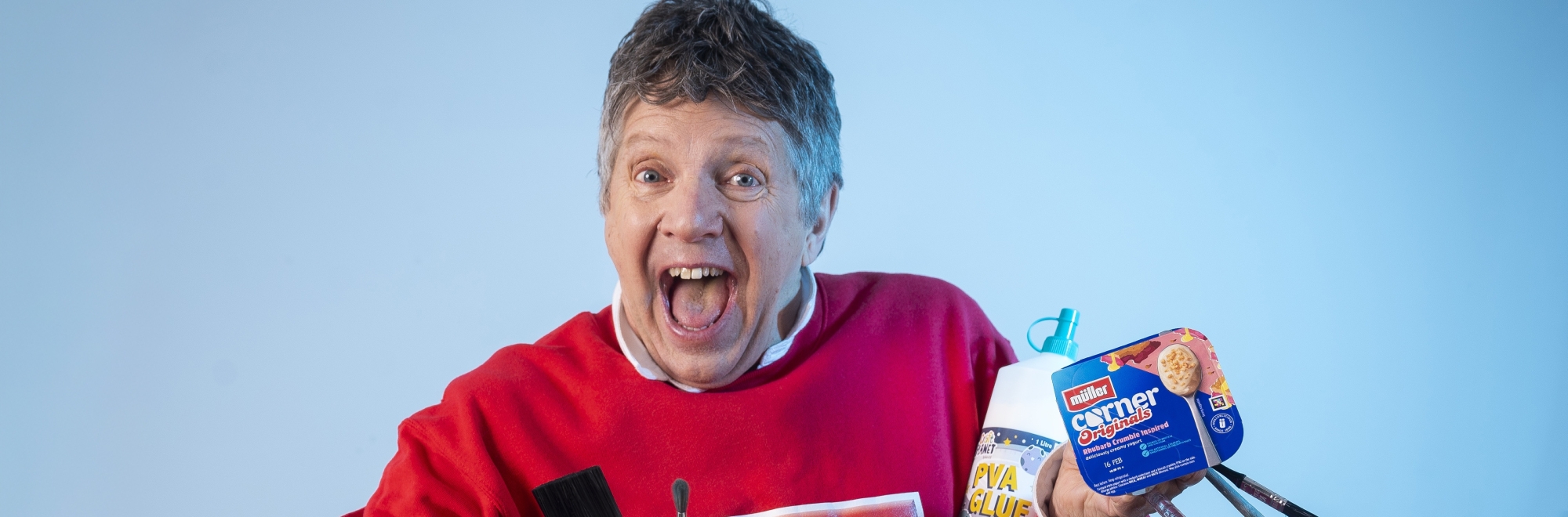
‘Art Attack for Grown-Ups’ sees Müller revive its Rhubarb Crumble flavour, and who better than Neil Buchanan to front the effort?
I’m a big fan of the 90s for reasons I’ll bang on about a bit more later, but for now, the take-home is that Müller is going all in on the omnipresent nostalgia from the era with the return of Müller Corner Originals Rhubarb Crumble, fronted by ‘Art Attack’ legend Neil Buchanan.
If you’d forgotten about him, that’s ok, as it’s been almost two decades since his last TV appearance.
What spurred our man to come out of retirement? “When I heard the Müller Corner Originals Rhubarb Crumble inspired yoghurt was coming back, I had to get involved,” he says. “It’s actually my favourite flavour! It’s been 30 years since it first launched, so bringing it back with my iconic ‘Big Art’ just felt like the perfect masterpiece."
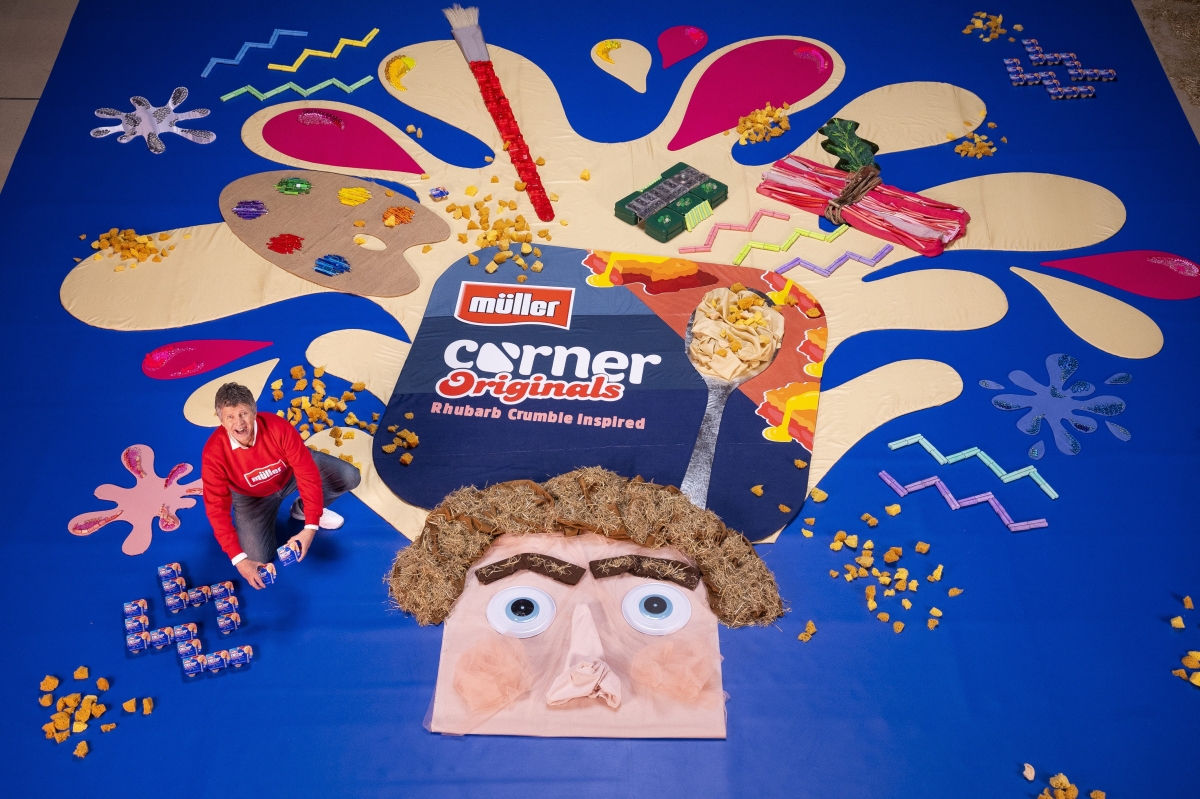
The campaign, created with LADbible Group and supported by EssenceMediacom, turns the comeback into a piece of “Big Art”, with Buchanan crafting a large-scale mural from nostalgic 90s artefacts including cassette tapes, skateboard wheels and more – to visualise the flavour.
Our take
Where recent Müller work has leaned into family-friendly warmth and functional product benefits, this campaign feels far more culturally focused and in line with social audiences.
Using the LADbible channel and turning Neil into an influencer in his own right (about time, I say) was a bit of a masterstroke, given that he’s a big part of a lot of childhoods, and its use of him (alongside a relaunch of an equally long-forgotten staple) is all honed in good spirits.
The campaign feels very ‘earned’ on a lot of levels. Müller still feels synonymous with the 90s, given that its branding still feels familiar, and was a must-have in any self-respecting kid’s lunchbox (as well as having a short-lived but memorable stint on Aston Villa's kit).
Buchanan’s inclusion, and the wholesome fun and creativity he brings, could hardly fail as a brand exercise.
Of course, this is coming from a 90s kid, who was reminded of his obsession for the era when a recent meme doing the rounds opined that men ‘think about the Roman Empire a lot in any given week’. While that’s true, I was reminded that I think about the 90s even more.
A shallow (but probably not inaccurate) reading of the recent cultural focus on the decade is that these trends are circular. The 70s/80s nostalgia in 2001, brought alive thanks to The Strokes, Kings of Leon, et al., is a prime example.
For me, however, the line in 1999’s ‘The Matrix’ about the period being “the peak of our civilisation” aged like wine.
The 90s still feel like such a peak, even now.
The decade had a freewheelin’ spirit where kids could run around their local common after school and be united culturally through the 4 channels we all watched. The pop music, meanwhile, was varied, oddball, and we all loved it - or at least loved to hate it.
But, while One Hit Wonders and Christmas Number 1s still really meant something back then, there was also a depth to the decade. There were infinite sub-genres to deep dive into (Seattle rock, jungle music, Lynch films, you name it). And it was a golden era for ads (Tango, Guinness, WKD, etc.).
Müller has tapped into all this successfully with the sort of homage the era deserves. This is nostalgia with teeth rather than misty-eyed sentimentality.
If you enjoyed this article, you can subscribe for free to our weekly email alert and receive a regular curation of the best creative campaigns by creatives themselves.
Published on: