


Marketing like it’s 1986: Behind the scenes of the Stranger Things campaign for Microsoft
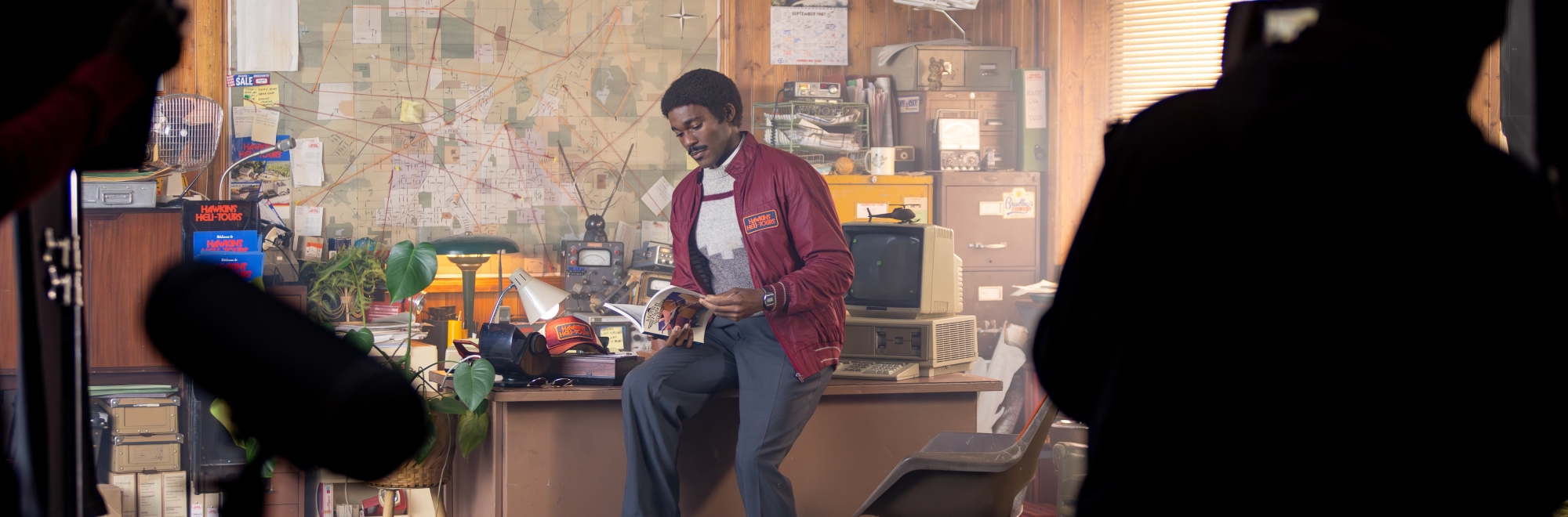
Crafting a Stranger Things x Microsoft Flight Simulator campaign, airlifted straight out of Hawkins, required reverence for Netflix’s beloved IP, says Iain Littlemore, freelance senior creative at Boo.
From the minute the brief landed, we knew the stakes. With brand guidelines that read more like a TV show bible, and the Duffer Brothers examining every detail with a flashlight, it was clear we were dealing with a piece of IP that had to be treated like a holy relic.
The challenge wasn’t to build a campaign for Netflix and Microsoft. It was to write a chapter inside the Stranger Things universe. Something so true to the show, even Dustin wouldn’t raise an eyebrow.
The last place on Earth you’d want to visit
The Microsoft Flight Simulator x Stranger Things expansion promised a world first: a fully realised digital twin of Hawkins, with the kind of 1:1 fidelity the game is known for. Finally, fans could visit the town they’d grown up with on TV.
But between government cover-ups, missing persons, and interdimensional horror, Hawkins is the last place on earth you’d want to book for a sightseeing trip. That tension became the idea.
Introducing… Hawkins Heli-Tours
A tour company that, at first glance, was all smiles and 1980s infomercial energy. But beneath the surface, a stranger story lurked. One fans had to follow the breadcrumbs to uncover.
From mayday-style supers in our hero film, to a local Indiana phone line with a secret message, to a code-protected set of online mission briefings, fans were pulled into a full-blown Starcourt-level conspiracy.
Masterminded by Murray Bauman and delivered in his signature mix of barbed insults and convoluted idioms, it enlisted them into the game to fly covert missions over the Mac-Z.
But for all of that to hold up, it had to belong in Hawkins.
Period marketing, piece by piece
What makes the show work is that it feels of its era. Not a nostalgic approximation, but lived-in authenticity. Believable, even when the unbelievable happens.
So we studied every 1980s tourism ad we could find. From Paul Hogan’s easy charm in “Come Say G’Day” for Tourism Australia, to the jingle-led chirpiness of Southwest Airlines’ “A Certain Southwest Spirit”.
From there, we created our own corn-fed, all-American spokesperson, Rick, to front the TV spot, calmly selling the dream vacation even as our “scenic” helicopter tour encountered interdimensional rifts and swarms of ‘demobats’.
We soundtracked it with a relentlessly optimistic jingle. Written in-house at Boo, sold in via an a cappella rendition over Teams, and later produced with Netflix Music Labs using 80s analogue synths and tape-style degradation. The kind of radio spot that could sit between hits on WSQK “The Squawk”.
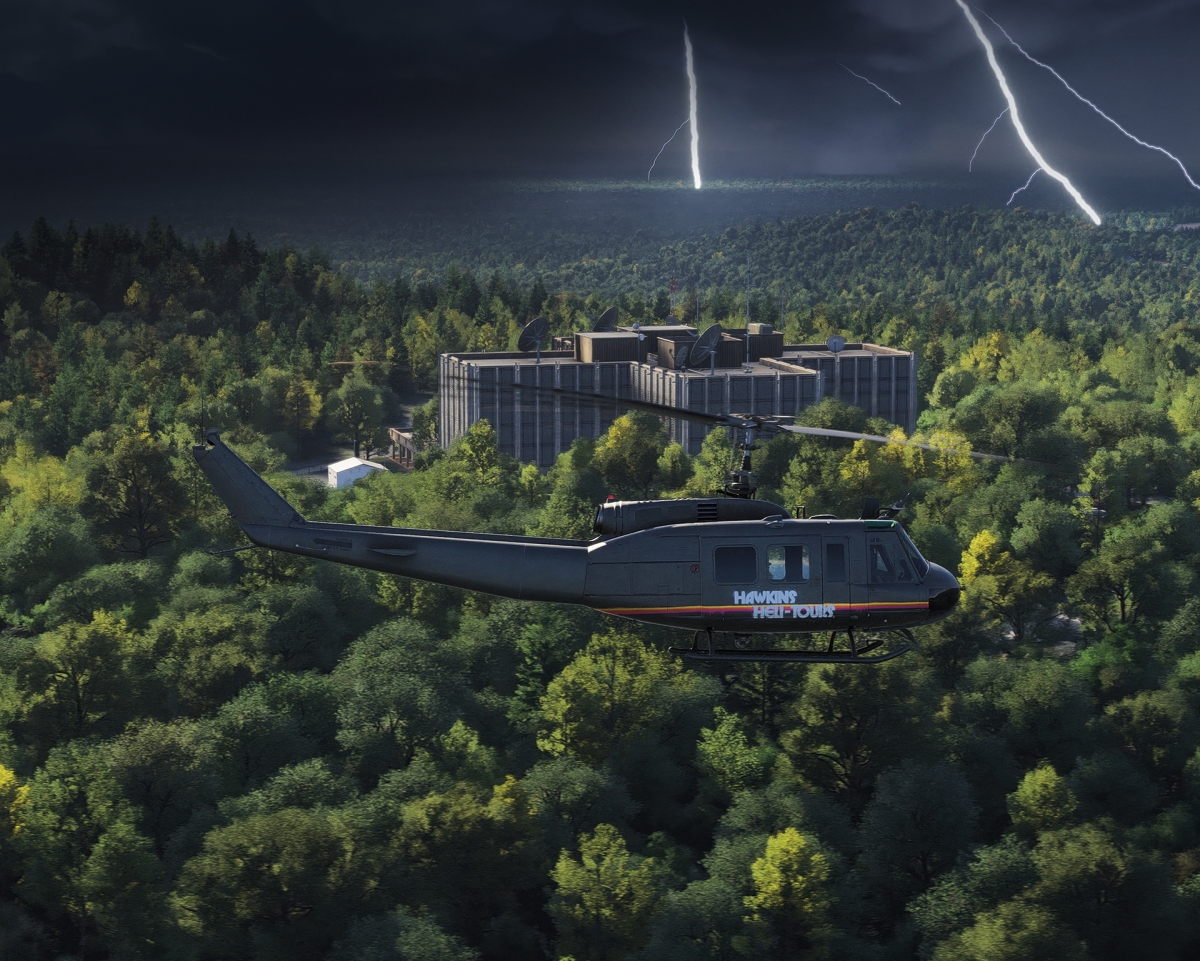
Detail by detail, we built the film with directors The Lynch Brothers, anchoring in-game footage with live set builds and a UH-1 chopper that had flown missions in Vietnam. Framed in 4:3, with janky camera moves and naff cuts to make it feel like found footage, and stitched together with transitions lifted from the Amiga’s Video Toaster software, authentic CRT burn-in and analogue grain.
A digital downgrade
Even when Hawkins Heli-Tours showed up digitally, it felt analogue.
Our microsite leaned into CompuServe, the pre-Internet internet. Home to mission briefings, Game Passes and aviator-themed merch, it was built around text-heavy menus, clunky 8-bit graphics and a UX just frustrating enough to land the era without breaking the funnel.
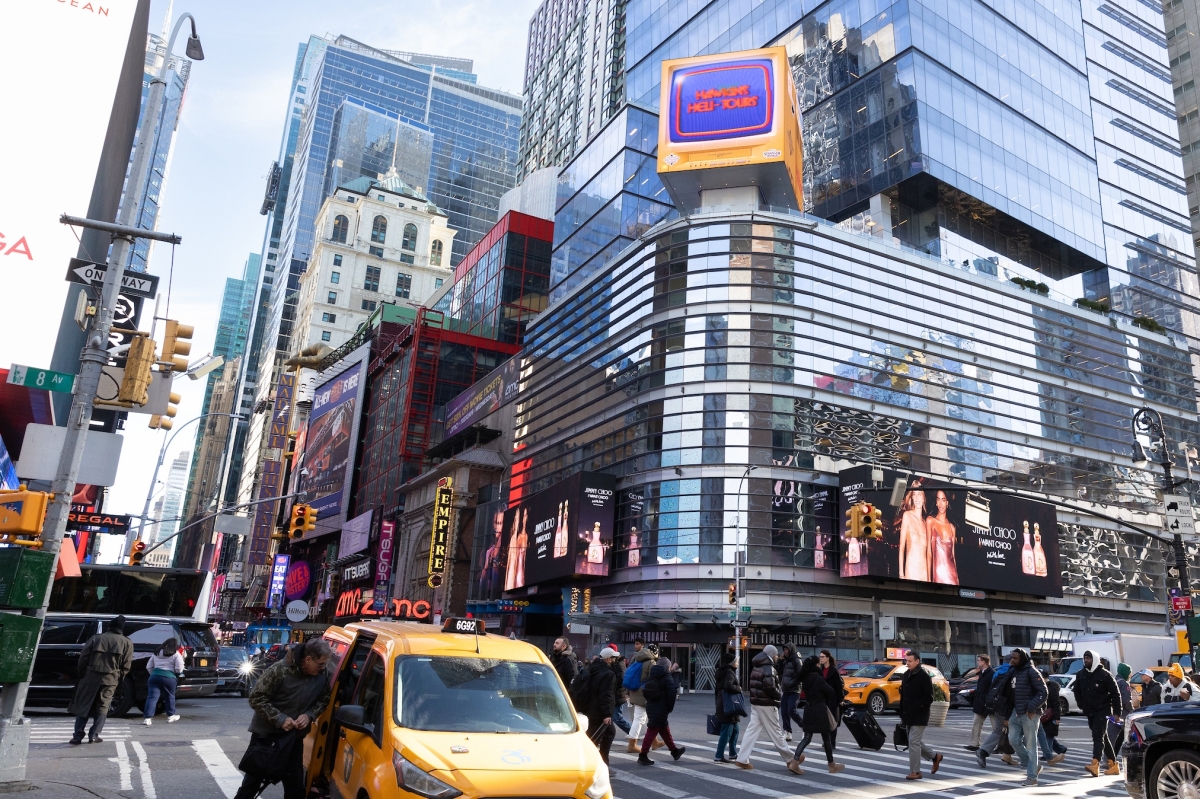
And for a week, we took over the iconic Microsoft Cube above Times Square. Transforming its three digital OOH screens into the world’s largest CRT monitor. Complete with a VHS loading and unloading, screen glare and a bulky plastic casing stained by cigarette smoke, it broadcast our coded tourism campaign.
Heli-dropped from Hawkins
Just blocks away, the second floor of the Microsoft Experience Center was reimagined as our world. With our hero film’s office set all but airlifted into the store. Only this time, there was no fourth wall to break. Like the game itself, every corner was filled in.
At first glance, it read like a cluttered 80s travel agency. Shag carpet underfoot, wood-panelling, an Amiga humming on the front desk, a view of downtown Hawkins drifting by. Even a grinning cardboard cutout of our spokesman, Rick. But look closer, and the façade began to crack.
Cryptic, hand-scribbled stickies from Murray. Cargo manifests that didn’t quite add up. Maps marked with covert flight paths and a code word. All pointing to our CompuServe terminal and its secret mission files.
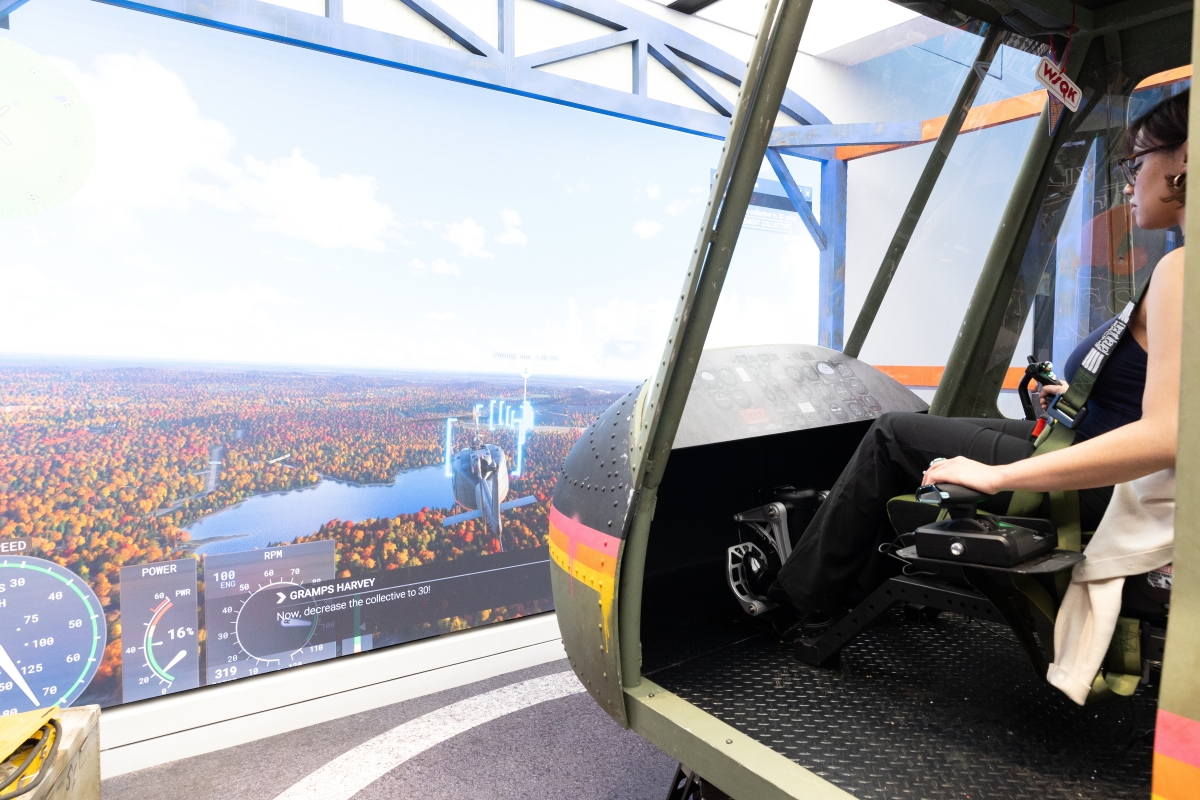
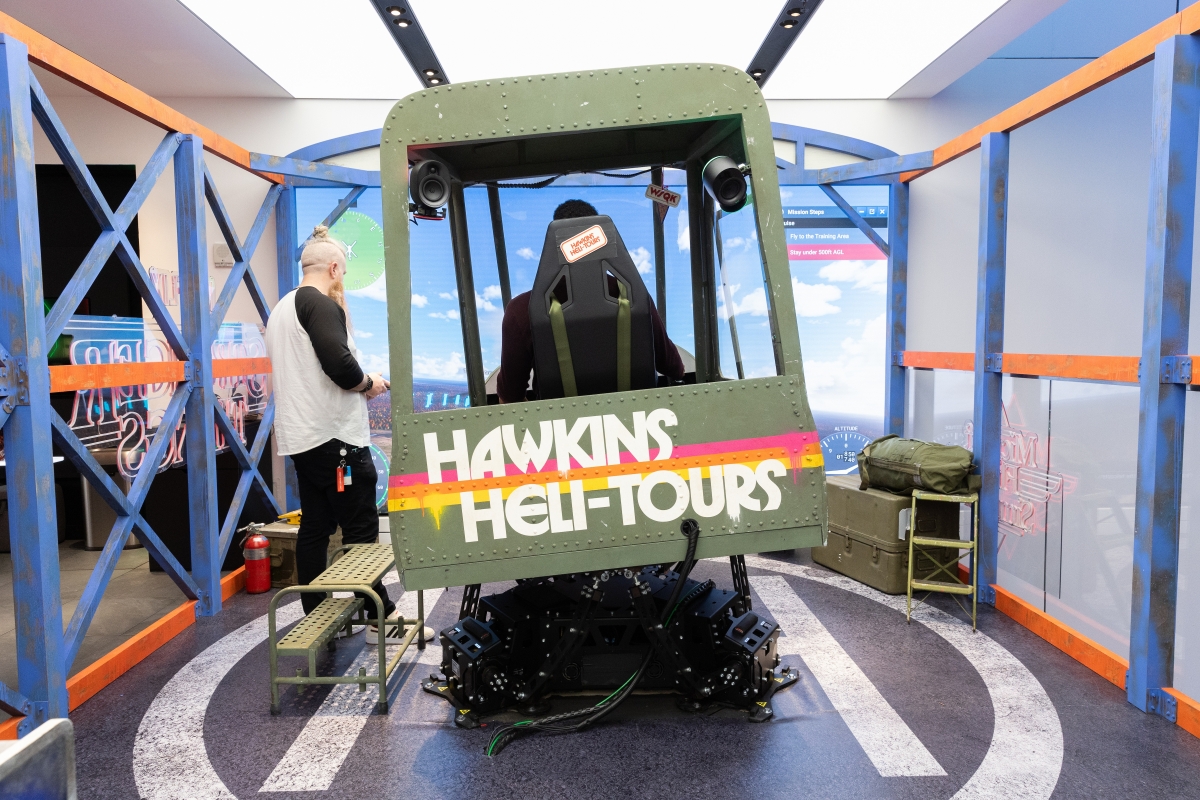
Briefed and ready to fly, fans climbed into the cockpit of a 4D motion UH-1 helicopter simulator and lifted off over Hawkins, as Murray barked narky instructions down their headsets. They weren’t just watching Hawkins anymore; they were inside it.
Cleared for takeoff
Hawkins Heli-Tours was fan fiction. Only this time it was canon. A story you didn’t just watch, but could climb into, flying risky missions over Hawkins with its title spray-painted down the side of your chopper.
From the client teams at Microsoft and Netflix to the team at Boo to the sparkies on set, everyone involved was a fan. Which meant total buy-in and total commitment, pre-flight through to lift-off.
The Duffer Brothers once described the show as a love letter to the golden era of Spielberg and Stephen King. This was our way of returning the favour.
Credits
Client Team: Mindy Rowe (Xbox), Marcos Waltenberg (Xbox), William Gahagan (Xbox), Whitney Seamons (Microsoft Flight Simulator), Christina Verdurmen (Microsoft Flight Simulator), Jorg Neumann (Microsoft Flight Simulator), Paul Diamond (Microsoft), Karen Zack (Netflix), Alex Tennis (Netflix), Sandra Ciconte (Netflix), Juan Luna (Netflix)
Partners: Netflix Music Labs (Music Production), Creative Outpost (Post-Production), Spark (MEC Experiential Production)
Boo Creative: Izaak Flanders (Creative Director), Iain Littlemore (Senior Creative), Isik Ulgenalp (Creative), Stephanie Charmail (Executive Producer), Amelia Potter (Motion Design), Paris Scott (Digital Design), George Allen (Design Director), Matthew Tebbs (Design), Jason Hall (Design)
Boo Accounts: Jack White (Managing Director), Hannah Livett (Account Director), Matias Alvigini (Senior Account Manager)
Direction & Production: The Lynch Brothers (Directors), Sashi Kissoon (DOP), Richard Newman (Assistant Director), Pete Cowasji (Sound), Sam Harley (Production Design), Reine Issa (Assistant Producer)
Art & Costume: Claire Johnston (Art Department), Laura Smith (Costume Design), Ava Gillies (Hair & Makeup)
Props Team: Claire Johnston, Ava Gillies, Ali McNab, Archie Williams, Rebekah Whelan
Cast: Borris Anthony York (Rick), Sam Shoubber
All images supplied by Iain Littlemore.
If you enjoyed this article, you can subscribe for free to our weekly email alert and receive a regular curation of the best creative campaigns by creatives themselves.
Published on: