


Revelling in the rivalry: Nike and adidas' competitive streaks are making both brands work harder
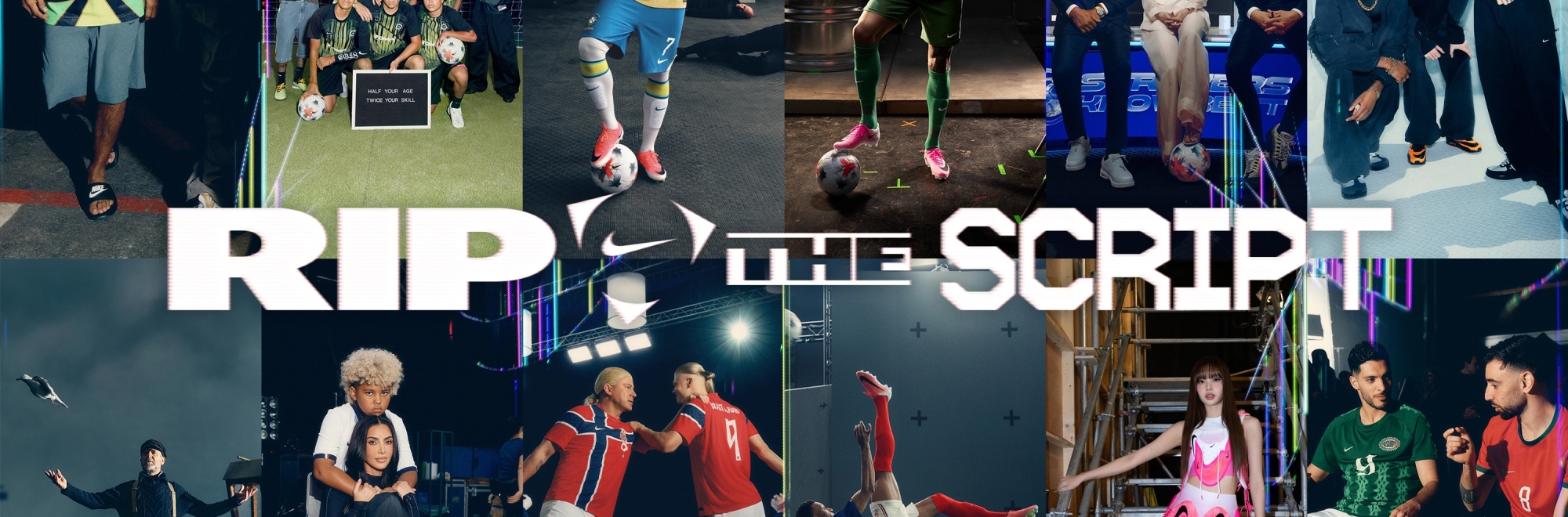
Every World Cup, the same conversation kicks off.
Feeds fill up with hot takes on who’s won: Nike or adidas. One film lands, then the other, and it quickly turns into a comparison exercise. It’s familiar, boring, predictable, and misses what’s actually going on.
Some of the best moments in sport never really belonged to one person. Messi doesn’t become Messi without Ronaldo pushing him every season. Kobe doesn’t become Kobe without chasing everything Jordan set before him. Rivalry is what raises the bar. It forces something close to obsession.
That’s where Nike and adidas are right now.
Look at Nike’s “Rip the Script” and it feels like a brand intent on stretching the format as far as it will go.
Six minutes long, overloaded with talent, deliberately chaotic. It starts with control, a film set with a clear direction, and then slowly unravels as the players stop listening and start playing how they want.
The whole thing is built around instinct taking over. Mbappé, Haaland and Vinícius Jr drive it, but the supporting cast propel it into something much bigger than football. You get Ronaldo alongside Travis Scott, a Kardashian drifting through in the background, and Cantona appearing in a way that feels knowingly absurd.
The chaos is too much to catch in one watch. It reminds me of old school Pepsi with its star-studded ads (but with a better narrative). It doesn’t act like a traditional ad; it feels more like the opening into something ongoing, with the film acting as the first chapter rather than the whole story.
Sad times for Cole Palmer, though. Appearing in the film but not actually making the England squad becomes part of Whatsapp chat.
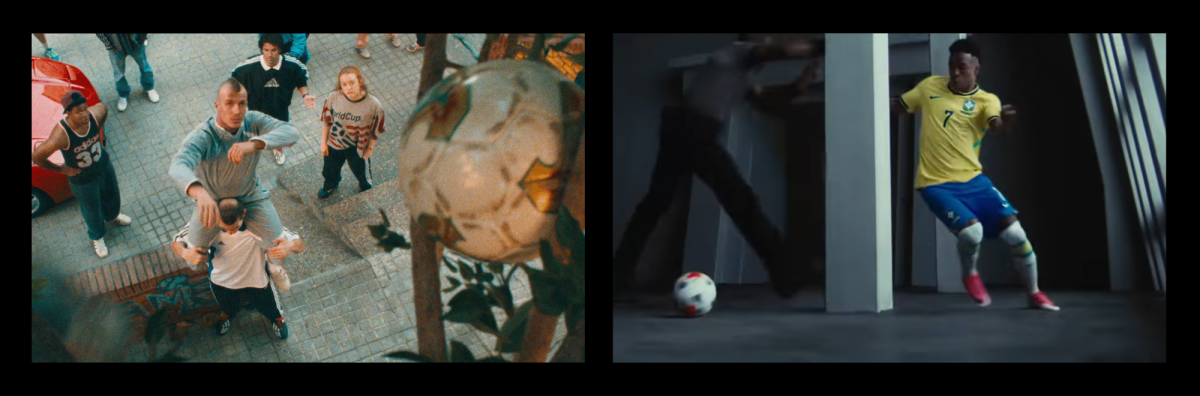
Adidas comes in with a different POV.
Its film is tighter, built around a single story. Chalamet plays the narrator, pulling together a team to take on a group of street players who have built up a bit of mythology around them.
The big names are still there, Messi, Beckham, Zidane, but they sit differently. They move through the story rather than dominating it. The idea is that football begins here, in smaller, unpolished places.
There’s nostalgia running through the story and the film’s grade. Old World Cup references, the texture of the environment, and the sense that the past still shapes how the game feels in the present.
Both brands make each other more interesting.
The purpose split has become intentional. It showed up around the London Marathon earlier in the year, with Nike leaning hard into elite performance while adidas went broader with innovation and running culture.
Nike stays close to the peak of the sport.
The players who define it, the idea that the game is at its most compelling when it slips out of structure. Adidas spends more time at the base—where the game began, who plays it, and why it matters outside of the professional level.
Both positions are clear and I’m here for both.
Nike probably edges it in terms of sheer impact. The scale, the ambition, the confidence to make something that long and that busy and trust that people will stay with it.
It works harder because adidas is pushing in the opposite direction at the same time. The counterbalance is where the real value is.
Because neither brand is really competing on product here, you barely see it. This is about meaning. It is about who owns what part of football culture, and how that is translated into something people recognise.
Football lives comfortably in both spaces (elite and origins), which is why the contrast doesn’t feel forced.
And it’s that tension that I think is pushing the work forward. Which is why the most interesting part of this World Cup isn’t which film people prefer; it’s that both exist at the same time, at that level, forcing each other to keep raising it.
Alright, alright, if I had to choose…. there’s a bit of brilliance from Nike. The film feels like it’s made to travel further. It’s made for spin-offs, for moments to break out and live on their own. You can already see the episodes, the clips, the talent-led extensions. It’s that kind of connected thinking that makes a difference.
If you enjoyed this article, you can subscribe for free to our weekly email alert and receive a regular curation of the best creative campaigns by creatives themselves.
Published on: