


Through the lens: Polaroid’s bold anti-AI creative
Being everything AI is not can be a powerful stance, says Dan Srokosz, creative director at AgencyUK.
As brands continue to grapple with how to respond to AI, smartphones and an increasingly screen-based culture, Polaroid has taken a decidedly analogue route.
Its latest campaign, ‘The Best of Summer Is Analog’, launched to support the Polaroid Go Generation 3, and continues the brand’s increasingly vocal celebration of life beyond the screen.
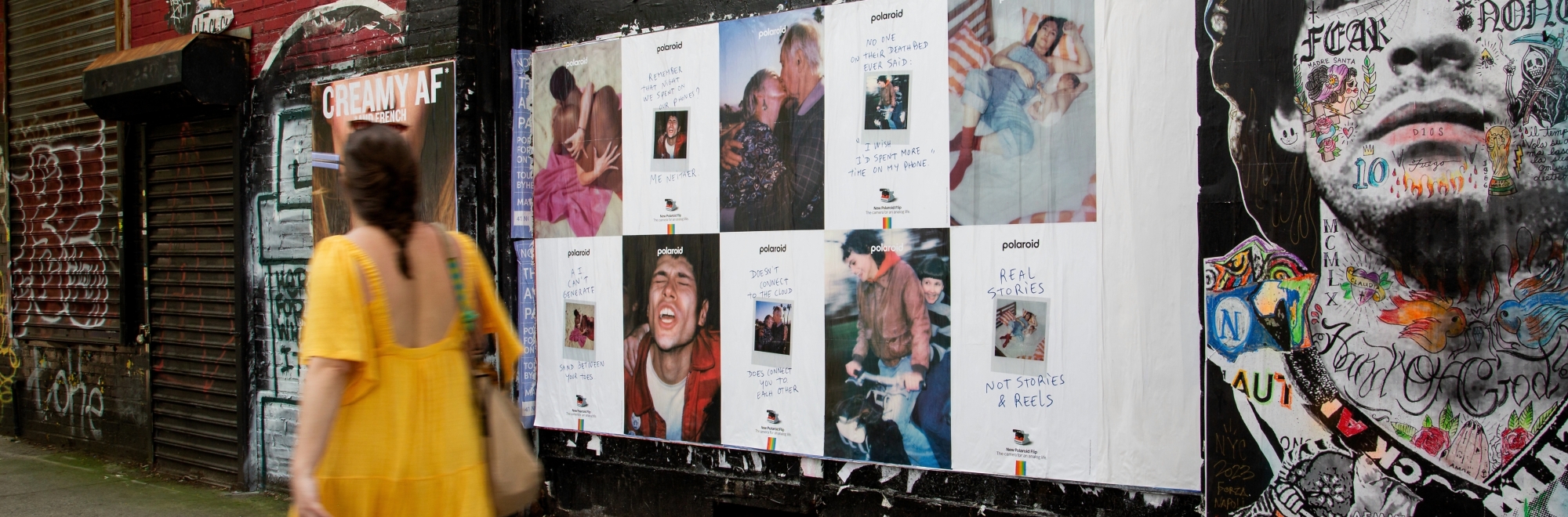
Rather than simply selling the benefits of instant photography, the campaign takes aim at the technology competing for our attention. One headline, displayed on a huge billboard at Coney Island, read: “Go jump in some water before the data centers drink it all up.” Other executions included “You can’t bask in blue light” and “Dance like nobody is recording.”
Running across New York, London and South Korea, the campaign was supported by phone-free experiences and influencer activity. It was an example of a brand finding a powerful position by defining itself in opposition to the dominant culture.
A joyful antidote
My first reaction was joy. Not only because I love Polaroids – read: physical photography in general – but because of how directly and loudly the campaign pushes back against the current tech zeitgeist of AI, smartphones, algorithms and general screen-based technology.
There’s something refreshing about a brand being prepared to take a position rather than simply trying to find a way to coexist with every new technological development.
Turning FOMO into something meaningful
For me, the campaign spoke to a core human truth: the more time we spend on screens, the less time we spend actually living. Although that isn’t a new observation – see Fujifilm Instax’s ‘For When It Clicks’ campaign – Polaroid’s take is refreshingly provocative through its unapologetically pro-human, anti-AI stance.
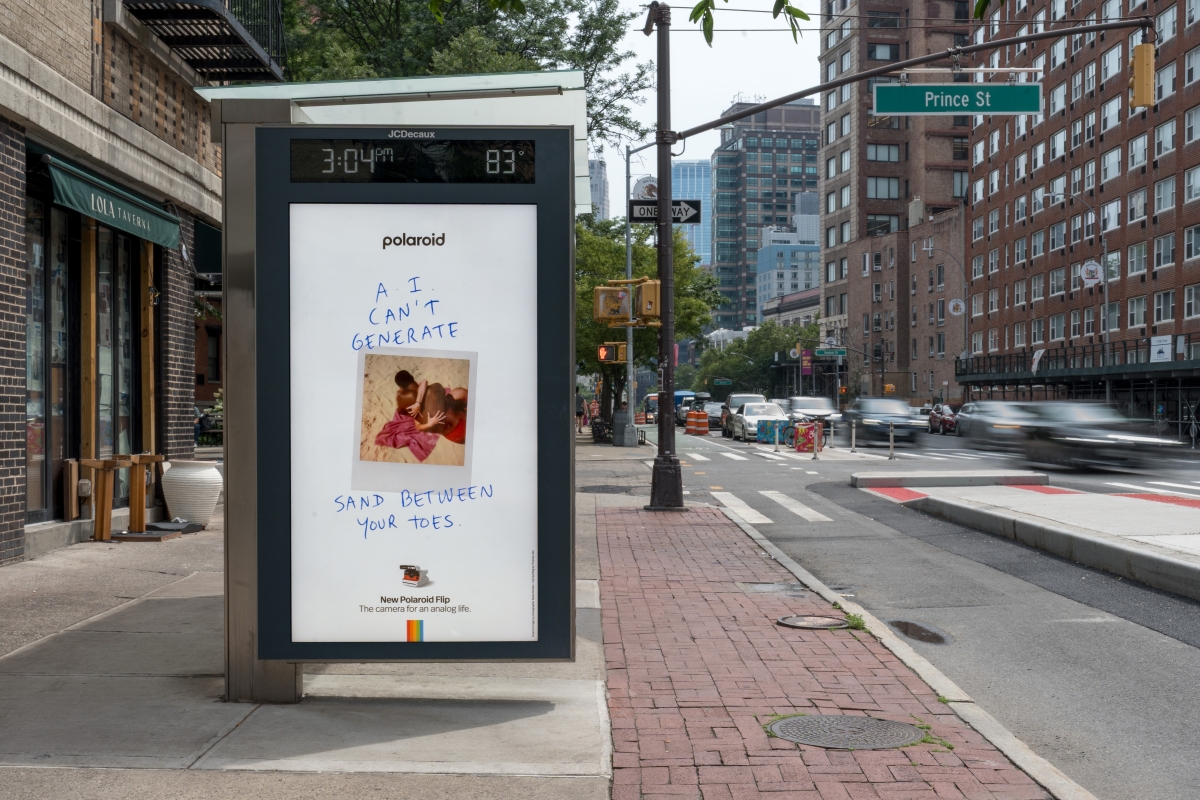
Through messaging such as “No one on their deathbed ever said: I wish I’d spent more time on my phone” or “AI can’t generate sand between your toes”, the campaign compels us to contemplate what we’re missing out on.
It’s a sharper, sadder version of FOMO than the one advertising usually sells. The fear isn’t “you’ll miss the [insert thing]”; it’s “you’ll miss the memory.”
That’s a powerful distinction. Good campaigns stand for something; great campaigns stand against something too.
Pro-tactile
Polaroid presents itself as a distinctive voice in the conversation by being everything AI and technology are not: analogue, simple and physical.
It seeks to redress the balance of our overconsumption of screen time by championing the humble instant photograph as a physical memory – the antithesis of our phone’s dense, never-to-be-looked-at-again photo library. That’s where the brand has a genuine advantage.
It’s not simply jumping on an anti-tech cultural trend. The product itself embodies the alternative.
You take a photograph, it physically appears in front of you, and you can hold it, give it to somebody or stick it somewhere you’ll actually see it.
The campaign highlights the importance of human connection and real, sensory experiences – the things that enrich our lives in a tangible and meaningful way.
Imperfection is meaningful
First is the messaging. There’s a fire in the belly of this campaign, and the copywriting delivers a sufficiently stinging slap of the face to challenge our mindless consumption of technology.
Its typographic delivery reads like our subconscious manifesto: both a handwritten reminder of the things we know deep down to be true and an invitation from a simpler time to embrace a more analogue way of living.
Then there’s the photography. It’s sometimes oversaturated, underlit and occasionally blurry. But rather than trying to hide those imperfections, the campaign embraces them.
It frames Polaroid’s key product attribute – instant, unedited imagery – as being true to the rawness of life itself.
In a world where AI can create technically perfect images in seconds, imperfection becomes an asset.
Making the media part of the idea
Then there’s the media. It’s as much an art direction choice as it is distribution.
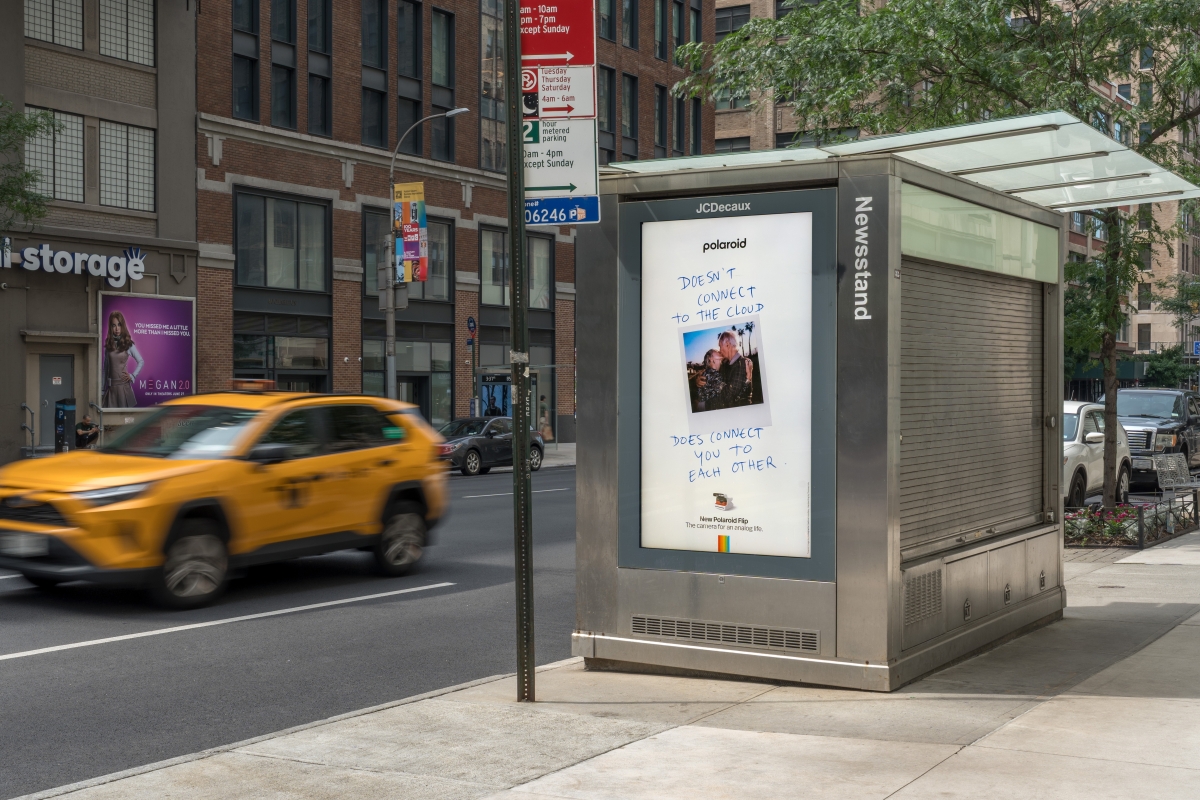
On a basic level, the choice of printed OOH supports the pro-human, anti-AI sentiment. But when placed near Apple and Google stores, it transforms the advertising from product promotion into something approaching a public health campaign. That’s a much more interesting role for advertising to play.
Finally, there are the phone-free walking tours, which push the idea further still, turning the rallying cry of ‘living analogue’ into a lived experience.
The fact that each tour ended with the opportunity to mail a print as a postcard closes the loop physically rather than digitally. It’s a lovely touch because the idea isn’t just being communicated; you’re actually experiencing it.
The human truth
The lesson for brands and creatives is simple: be distinctive and differentiated.
Search for the human truth that underpins your product truth and, if it can tie into a wider existential societal issue, even better.
Say the thing your brand actually believes, not the thing your category always says. And if you can authentically stand against something, all the better.
In an age when so many brands are trying to work out how to incorporate AI into their communications, there’s something powerful about asking the opposite question: what does your brand offer that AI can’t?
For Polaroid, the answer is remarkably simple. It’s the physicality of the photograph. The imperfection. The memory. The moment itself.
And, perhaps most importantly, the reminder to put the phone down and actually be there when it happens.
 Credit: Polaroid newsroom
If you enjoyed this article, you can subscribe for free to our weekly email alert and receive a regular curation of the best creative campaigns by creatives themselves.
Published on: