


Why death is alive in advertising
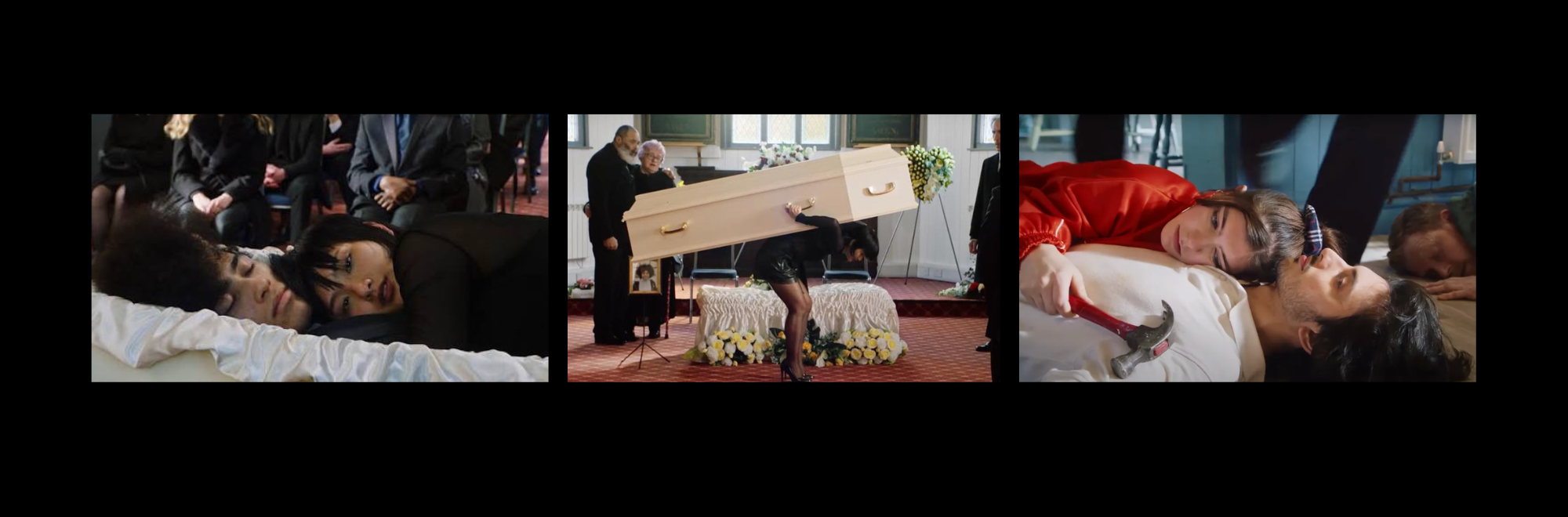
While love, sex and fear are advertising mainstays, death is increasingly rearing its head as a canny creative play.
People, generally, didn't use to die in ads.
A growing body of creative work from the likes of Greenpeace, the aptly named Liquid Death, and Lynx, however, is confronting death directly, using humour, absurdity, rebellion and even a dash of hope.
Is the Lynx effect dead?
We were reminded of this trend when Lynx's 'The Power of a Fragrance: Funeral' by LOLA MullenLowe popped up on our LinkedIn feed. Lynx’s ‘this fragrance makes you irresistible’ formula can run a little thin, but this genuinely oddball effort raised a chuckle, in no small part by its visceral confrontation of the final taboo.
The ad imagines a wake descending into chaos after mourners discover that the deceased was wearing Lynx Blue Lavender. The attraction is so overwhelming that a woman falls for the man in the coffin and quite literally takes him away.
Directed by Lionel Goldstein through Czar.be, the film marked a return to the brand's roots. Tomás Ostiglia, executive creative director at LOLA MullenLowe, was explicit that the ad was born out of a need to bring humour back to advertising: "We always say we want humour to come back, but few times do agencies and clients dare to do what needs to be done to put this into practice,” he said.
Hanes’ brush with death
Where Lynx uses death for shock and smiles value, Hanes uses it to highlight the enduring appeal of its underwear.
Created by Special US, Hanes' 'Get Comfortable: Loyalty' sees a deceased man inside a casket wearing his favourite Hanes clothing. The impeccably shot ad features a satisfied widow (we assume) taking comfort that her deceased partner is in comfort, even in death.
The wider 'Get Comfortable' platform was an exercise in exploring awkward situations, handled with ease because the protagonists feel comfortable in what they're wearing. Other episodes saw a woman shopping in her underwear and a man shrugging off being publicly ‘pantsed’.
Directed by Nick Ball through MJZ, the spots smartly combined sex appeal with absurdity and morbidity.
Drinking to murder
While the above dabble in brief flirtations with death, Liquid Death has made it its entire brand philosophy, hence 'Murder Your Thirst'.
Founded by Mike Cessario, the canned-water brand uses shock value to bring life to what might be an otherwise forgettable FMCG product.
It’s hard to argue that the brand’s visual language of heavy metal, horror and mortality has made it a pretty unforgettable cultural mainstay.
Early campaigns such as 'Deadliest Stuff on Earth?' and 'Hey Kids, Murder Your Thirst' used aggressive visuals and dark humour to make hydration feel rebellious. The joke, of course, is in the juxtaposition, ie that consumers are making a relatively healthy choice while looking like they're doing something terrible.
Indeed, the brand's efforts bringing death imagery mainstream might well have influenced much of the above.
The death of subtle messaging
Greenpeace's 'We Won't Rest In Peace', created by ELVIS, is perhaps the most unrelenting in its confrontation with death.
The campaign really ‘goes there’ in its attempts to position legacy donations as a final act of environmental activism.
The campaign taps into the British tradition of dark humour for its fundraising intent, and, like much of Greenpeace’s output, it’s anything but forgettable.
Our Take
In an environment flooded with brand messaging, the stakes have been raised when it comes to prompting a reaction.
Our discomfort surrounding ‘the inevitable’ is as ripe for creative potential as our paranoia, sexuality, or desire for exponential self-improvement.
The most effective death-themed campaigns, however, use mortality to encourage you to act differently in life.
Whether your brand is seeking to raise people’s attraction levels, quench their thirst, increase their comfort levels, or prompt a bit of charitable giving, confronting death might help you rest in peace.
If you enjoyed this article, you can subscribe for free to our weekly email alert and receive a regular curation of the best creative campaigns by creatives themselves.
Published on: