


Women’s Aid and Alzheimer’s Society use World Cup as a lens on harm and memory
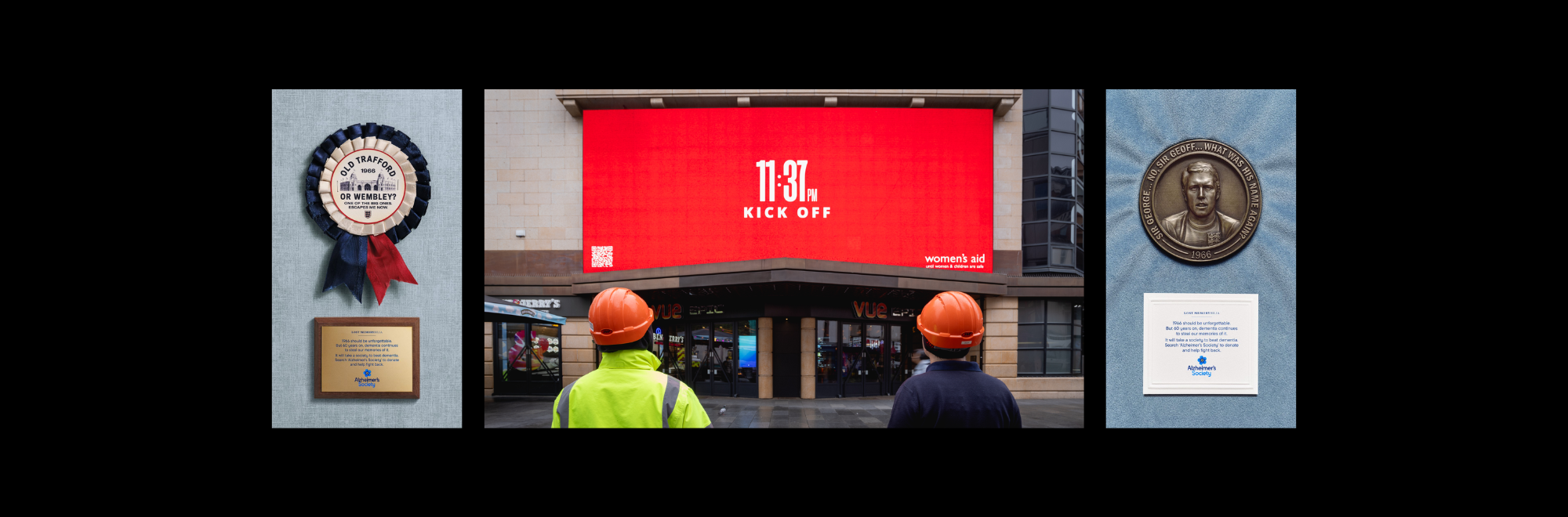
As the FIFA World Cup 2026 unfolds, Women’s Aid and Alzheimer’s Society are reframing what the moment means.
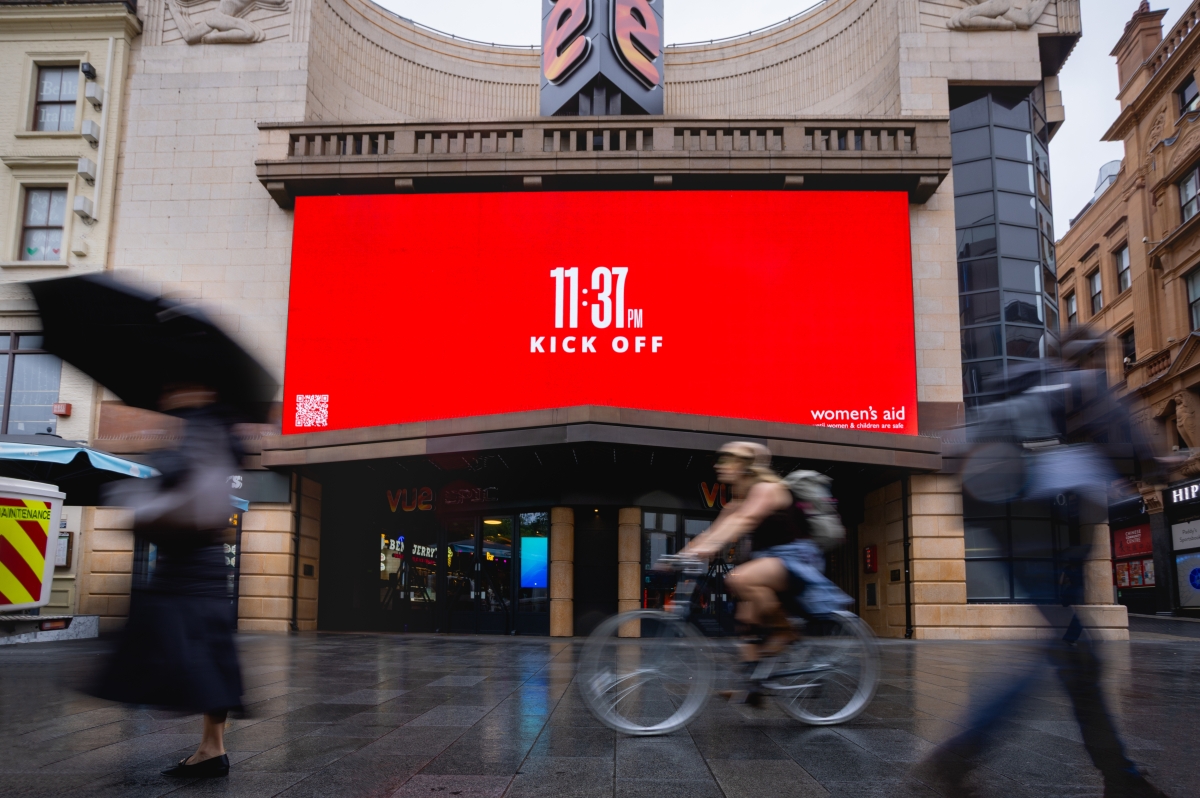
Ahead of England’s opening fixture last week, Women’s Aid launched ‘The Other Kick Off’, a campaign that begins with a familiar footballing question: “What time is kick-off?”
Instead of answering with a match schedule, the campaign directs audiences to a different time entirely: 11:37pm.
The figure represents the estimated moment when domestic abuse incidents are most likely to peak following a match, calculated using historical reporting data alongside match timings, added time, and behavioural patterns such as post-game drinking and travel.
The work, created by Elvis with PR support by Mischief, appears across out-of-home placements in city centres, fan zones and transport hubs, environments typically associated with collective excitement. But instead of reinforcing anticipation, the campaign introduces unease.
Visually, the creative borrows the language of football media with its fixture-style typography and match graphics. Then it subverts the message. QR codes allow viewers to uncover the reasoning behind the time.
The campaign also extends into search, intercepting audiences at the precise moment they’re actively looking for fixture information.
Powerful work.
Alzheimer’s ‘Lost Memorabilia
Where Women’s Aid looks at the immediate aftermath of the game, Alzheimer’s Society takes a longer view.
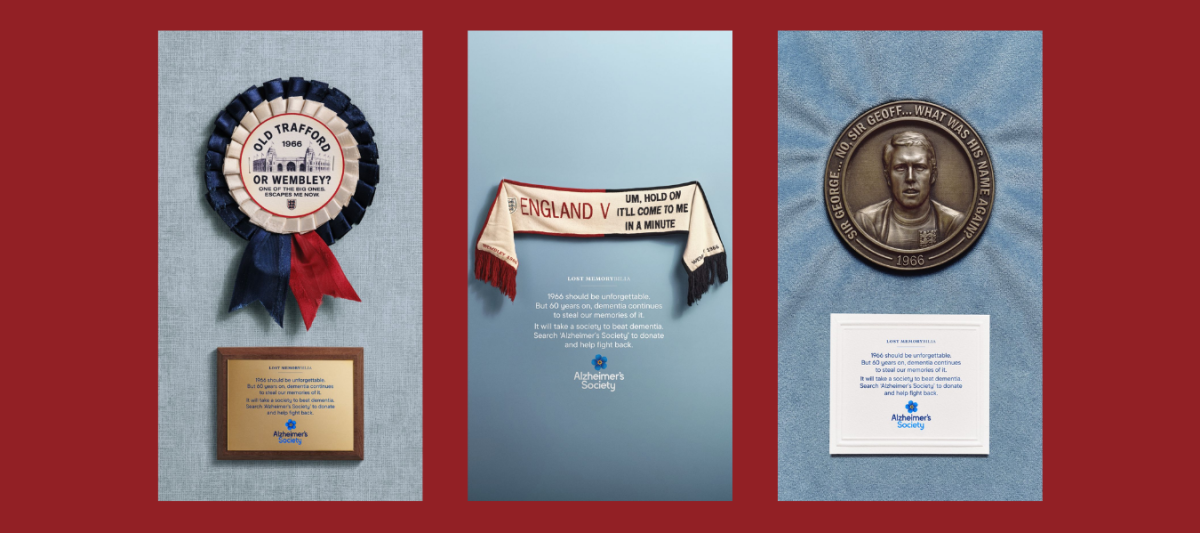
‘Lost Memorabilia’ arrives as England’s 1966 World Cup win marks its 60th anniversary. Instead of celebrating that memory, the campaign centres on a series of meticulously crafted memorabilia items that instead appear incomplete or fragmented.
Details are missing. Names have faded. Moments are partially erased.
These artefacts, created by artists Ben Millar and Liz Putland, mimic the effects of dementia: a condition that gradually strips away memory, including culturally significant moments like the 1966 victory.
Again, such impactful visuals make this, and the Women's Aid work, strong, emotive and compelling campaigns that we hope everyone pays attention to.
If you enjoyed this article, you can subscribe for free to our weekly email alert and receive a regular curation of the best creative campaigns by creatives themselves.
Published on: