



Creative Corner: Reject The Rejections, School Food Project and Specsavers' StartLine
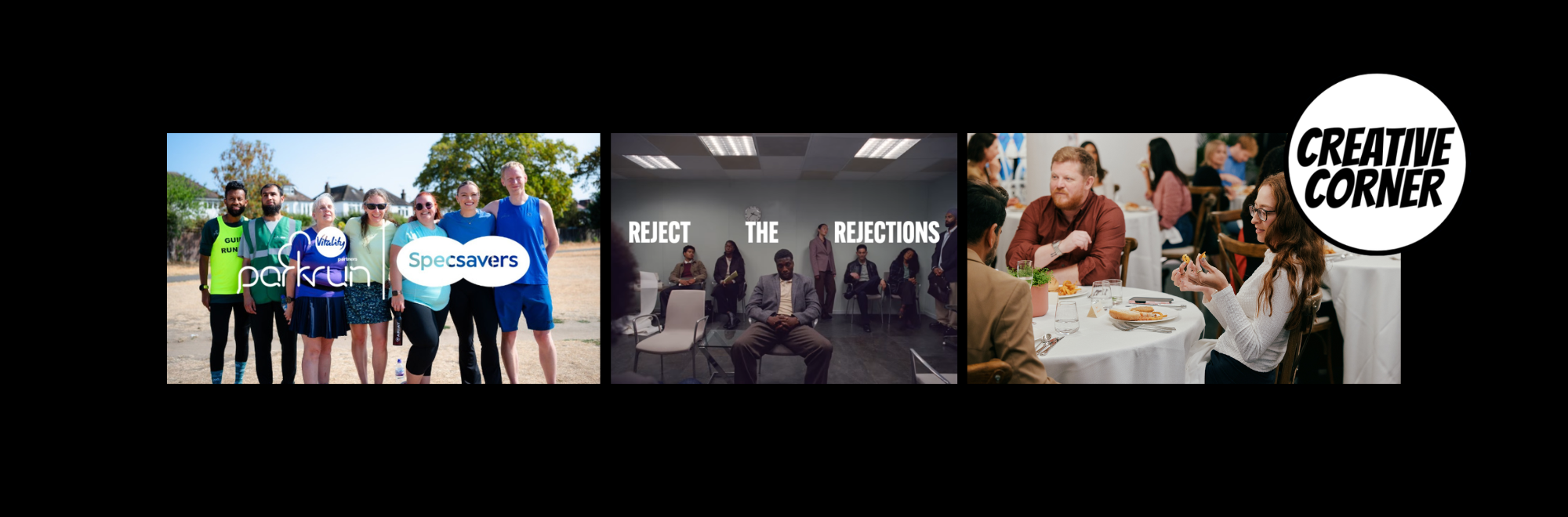
This week’s Creative Corner has a purpose about it.
Each campaign has found a problem, identified an interesting truth and then worked out how they can actually do something about it.
Read on to see how People Like Us used the language of automated rejection to expose the bias baked into recruitment, how The Schools Food Project ‘launched’ a Michelin-style restaurant to campaign for better school meals, and how Specsavers' StartLine initiative tackles the very real barriers preventing people with accessibility needs from joining a parkrun.
Rejected by a robot
I was at an industry conference yesterday, and the subject of recruitment and AI’s role in the job application process was a hot topic. Such is the proliferation of robot screening that one job seeker commented that they had applied on a Friday afternoon and were rejected on a Saturday morning. Research has also proved that automated hiring software is making the job hunt even harder for ethnic minorities in the UK.
And that’s the premise behind People Like Us’ new campaign, Reject the Rejections, created with independent agency Worth Your While. The creative is rooted in research showing ethnic minority applicants are rejected faster than white candidates (41% within an hour of applying vs 32%) while 70% have removed elements of their identity from their CVs in an attempt to get past automated systems.
At its heart is Dear [Name], a four-minute film starring Ebenezer Gyau of Amandaland and Black Mirror fame, which turns the painfully familiar language of rejection emails into spoken-word poetry. Set in a stark waiting room, Gyau is surrounded by other ethnic minority jobseekers, separated from an all-white hiring team by a two-way mirror.
As the corporate platitudes keep coming, “not quite the right culture fit” and “we’ve decided to move forward in a different direction”, the film builds towards a pointed punchline: the only white candidate in the room gets the job. In response, People Like Us has also created a two-click tool allowing rejected candidates to ask whether automation was involved and request a human review.
Commenting on the campaign, Sheeraz Gulsher, co-founder of People Like Us, said: “Employers aren’t the villains here; most resort to automation in good faith to cope with a surging volume of applicants, and, according to recent research, four in ten do it believing they are reducing bias. However, good faith isn’t governance – when 82% of the employers who checked found outcomes vary by ethnicity, ‘we didn’t know’ stops being a defence.”
The school dinner nobody ordered
I think you’d be hard pushed to find many people who don’t have at least one shudder-inducing memory of school dinners. Mine is still being made to finish my semolina pudding, it’s basically wallpaper paste in disguise. Despite numerous efforts to improve school dinners, being a father of three kids, I know those memories are still being made by new generations.
It’s why I read with interest the launch of the Government’s updated school food standards. In summary, more lentils, less fried food, and why this campaign for the School Food Project by BBH London caught my eye this week.
Using the tried and tested mechanic of a pop-up restaurant, Centena, an anagram of canteen, was fronted by Michelin-starred chef Angela Hartnett, with hoodwinked diners invited to sample what they thought was her latest culinary venture.
Instead, they were served the reality of school food: processed chicken burgers, stale buns, soggy chips and cold, congealed baked beans. Cameras captured their reactions as they were revealed the truth before then showing them what school food could look like.
Landing alongside the Government announcement, the filmed reactions encourage parents to sign their kids’ school up for help from the School Food Project via the campaign hub.
If this campaign can help children discover food that can tantalise their taste buds more than the high street chicken shop and erase those school dinner shudders, I’m all for it.
Specsavers gets parkrun to the StartLine
Ending this week's column on a campaign that, although simple, is yet another example of how Specsavers doesn’t just do clever creative like its products; it creates meaningful change.
If you can get out of bed on time on a Saturday morning, parkrun has always been simple: turn up, walk, jog, run or volunteer, and be part of something bigger, a community. But for some, getting to the start line isn’t so straightforward even if they can beat the alarm clock.
Specsavers has joined with Parkrun to create StartLine, a nationwide initiative designed to remove barriers faced by people with accessibility needs.
Research found 49% of people with accessibility needs want to attend parkrun more often but lack the confidence to go alone, while 54% said they would take part if barriers around information, support and navigation were removed.
Rather than donating some cash in return for plastering its logo, Specsavers has helped create a kit of solutions. The StartLine Packs include large-print course maps, guide tethers for blind and partially sighted runners, high-visibility “Please give me space” bibs, step-up boxes and A3 whiteboards to make information easier. The packs will be rolled out to 100 participating Parkrun events across the UK.
Yet another example of an insightful execution by the brand that seems to do no wrong when it comes to creativity.
That's it for this week's Creative Corner!
Remember, if you’ve seen something that’s caught your eye, or if you’ve been working on something you’re particularly proud of, please do get in touch via paul.lucas@fanclubpr.com.
I’d love to hear about it.
If you enjoyed this article, you can subscribe for free to our weekly email alert and receive a regular curation of the best creative campaigns by creatives themselves.
Published on: