


I Am Not A Typo campaign prompts Microsoft to update English (UK) dictionaries with more inclusive name database
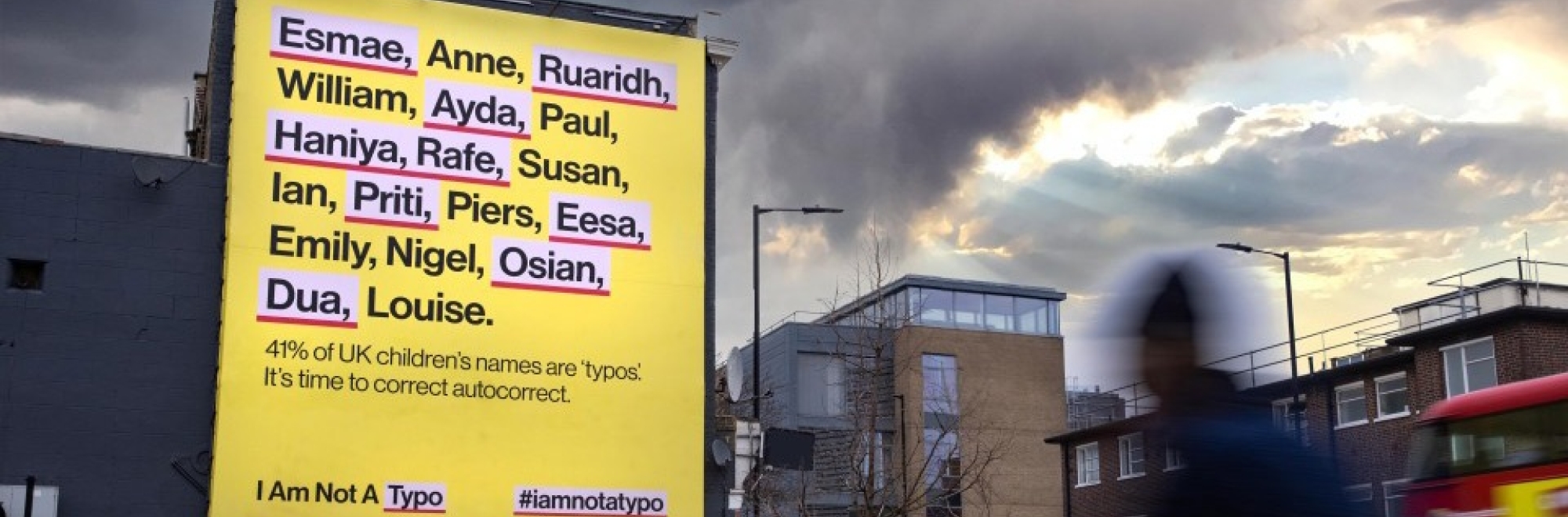
Campaigners challenge other major tech companies to correct their autocorrect as Microsoft ‘spellchecks spellcheck’.
Thousands of UK baby names previously flagged as possible typos by our tech devices are now free of the red squiggle that once marked them as potentially incorrect.
Responding to feedback from customers and working with members of the I Am Not A Typo (IANAT) campaign, Microsoft has implemented product updates to ensure its dictionary better reflects the names of people living in modern, multicultural Britain, using official Office for National Statistics (ONS) baby name data as a guide.
The change means that thousands of names – including many of African, Asian, Eastern European, Scottish, Welsh, and Irish origin – will now be correctly recognised in Microsoft applications on desktop devices. Names previously not recognised included Ottilie, Esmae, Liyana, Zarah, Ruaridh, Eesa, Fiadh and Osian, despite thousands of real-world occurrences in the UK each year, as detailed in ONS baby name registration data.
“This is positive news for everyone who’s been told by their device that their name looks like a mistake,” said Cathal Wogan, representative for IANAT, a non-profit campaign powered by a collective of collaborators.
“Technology shapes how we see ourselves and each other. For too long, our devices have been telling people – especially those from underrepresented communities – that they don’t belong, or they or their identities are invalid in some way. This update from Microsoft, one of the world’s most important companies, proves that when we work together positive change is possible.”
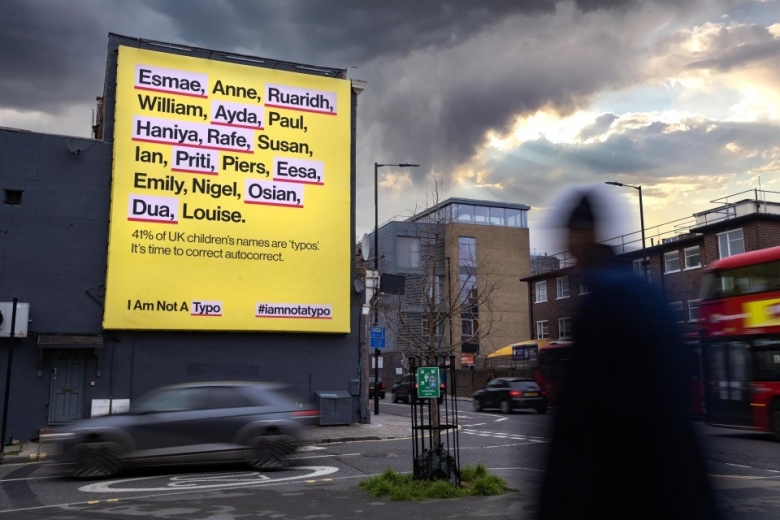
IANAT launched in 2024, having found that 5,492 out of 13,532 (41%) given to children in England and Wales (with a minimum of three occurrences) were flagged as potential typos during tests using Microsoft Word’s English (UK) dictionary on some devices. That included names with hundreds, even thousands, of real-world occurrences, while less common names remained untouched, for example the name Esmae, which occurred 2,328 times among baby girls in the five years from 2017 to 2021, compared with 36 occurrences of the name Nigel in the same period.
Microsoft has now added hundreds of previously missing names to its English spellcheck dictionary, enhanced its pattern-matching logic to detect likely names that are not specifically listed in the ONS guide, and made name behaviour more uniform across Microsoft-supported platforms. When replicating the same testing from previous years, IANAT found that just 2% of names featured in the most recent ONS name registration data were flagged as possible typos on Microsoft apps.
Microsoft acknowledged IANAT’s role in bringing the issue to light, highlighting the importance of product feedback loops with users and continued efforts to improve systems.
IANAT emphasised that it will continue to hold technology companies accountable, and is calling for further progress on this tech inclusivity issue.
“Microsoft has stepped up here, but this doesn’t end our mission to correct autocorrect and spellcheck spellcheck across all platforms,” Cathal from IANAT added. “It remains the case that many platforms and devices are still short of par. Every tech company responsible for these systems needs to ensure its products reflect the societies they serve. Our names are not typos. They’re our identities.”
If you enjoyed this article, you can subscribe for free to our weekly email alert and receive a regular curation of the best creative campaigns by creatives themselves.
Published on: