

Planned happenstance: Guy Moore tells the story behind a Wrangler classic
I’ve always been fascinated by film.
I remember as a little boy being allowed to stay up late, and my mum and Dad were watching Midnight Cowboy. That film really had a profound effect on me. The opening scene, the sound design, editing, and music were mind-blowing. But the bit that really intrigued me more than anything else was: how did they make the film look so candid? The photography seemed so matter-of-fact and beautiful at the same time.
Stitch all that together with the rest of the craft and voila! Perfection.
Years later, I joined the world of advertising and had the pleasure of surrounding myself with more crafted moments from some of the best creative filmmakers in the world. One such person was Jonathan Glazer.
I’d already worked with him making Nike ‘Parklife’, and watching how much preparation goes into making something look natural was a dream. Jonathan once said to me, "I need my films to have soul", and boy does he deliver.
So a short time after that experience, I bumped into him whilst at Abbott Mead Vickers, and he was working with Nick Worthington and Paul Brazier: the creative aficionados responsible for multiple award-winning pieces of work. The project he was working on was for Wrangler, 'the original American jeans suitable for rodeo use', and I paid particular attention.
As Paul Brazier says, "their toughness had a purpose, and the people wearing them demonstrated it rather convincingly. Europeans could respect all that. But relatively few of them spent their weekends trying to stay on a bull. They did ride other things however: skateboards, BMX bikes, motorcycles. They travelled in cars and vans and on trains."
Hence the line “Whatever you ride.”
Over time, I watched the flurry of activity around their office and Jonathan popping in and out. I eagerly awaited the end result… and I wasn’t disappointed.
The film is an absolute adrenaline rush.
It's so full of energy and captures the bold spirit of the intrepid traveller, all housed in a squeaky Munchkin surreal soundscape.
The music… I had to ask… why that track?
I’ll let Nick Worthington take you through that choice:
Nick Worthington (NW): "Regarding the music, we had a track that we were in love with from the start. It was Johnny Depp reading an extract from a Jack Kerouac novel. It was blindingly good, but dark as fuck. Perfect, we thought, for this bit of film.
We cut it to that track, and I can remember the German clients coming over (yeah, Wrangler was big in Germany, bigger than Levi's). And we showed them the cut at the edit suite in Soho.
Silence.
The clients asked Braze and me to step outside for a chat:
'We fucking hate it'. They said.
Shit.
OK, step back a bit. 'Which bits do you hate?'
'All of it, it's 100% wrong'.
We backtracked to 'what they liked before the shoot', what they were expecting?
They wanted it to be exciting and adventurous, not lonely, bleak and dark.
Double shit.
We were fucked.
We went back into the room as the clients left for Germany.
We said we'd fix it, but had no clue what to do.
We all fucking loved what we had; it was incredible.
When we told Jonathan and explained we thought we could change the track, he said: "What do they want, fucking Walt Disney?"
We sat there and considered this idiotic request, as creatives do, then Sam (Sneade), the editor, said, 'like 'follow the fucking yellow brick road?'
I am pretty sure we were all joking, but the madness of Judy Garland singing 'Follow the Yellow Brick Road' was instantly interesting.
In less than five minutes we had pivoted to the exact opposite of where we had been, and it worked, possibly better than the Johnny Depp track.
The 1939 recording from the original stage show meant it was out of copyright, bonus!
We got the vinyl (or bakerlite) from America, Pete Raeburn wove his magic, and I don't recall changing a single shot.
I'm sure Sam slipped and slid a few frames, but it was instantly mesmerising and a classic example of how the complete opposite, the exact thing you are trying not to do, is often fantastically interesting and creates new depth and meaning."
Hidden depth
There’s a lovely connection underneath the apparent incongruity. The Wizard of Oz is itself a journey through an unfamiliar world, full of extraordinary encounters, which is exactly what the film portrays.
I can’t imagine the film without that helium-induced backdrop. Perfect.
So now that question had been answered, there were a few more I was desperate to ask. Had all those wonderful candid shots been planned?
Well, the truth was that everything had been planned.
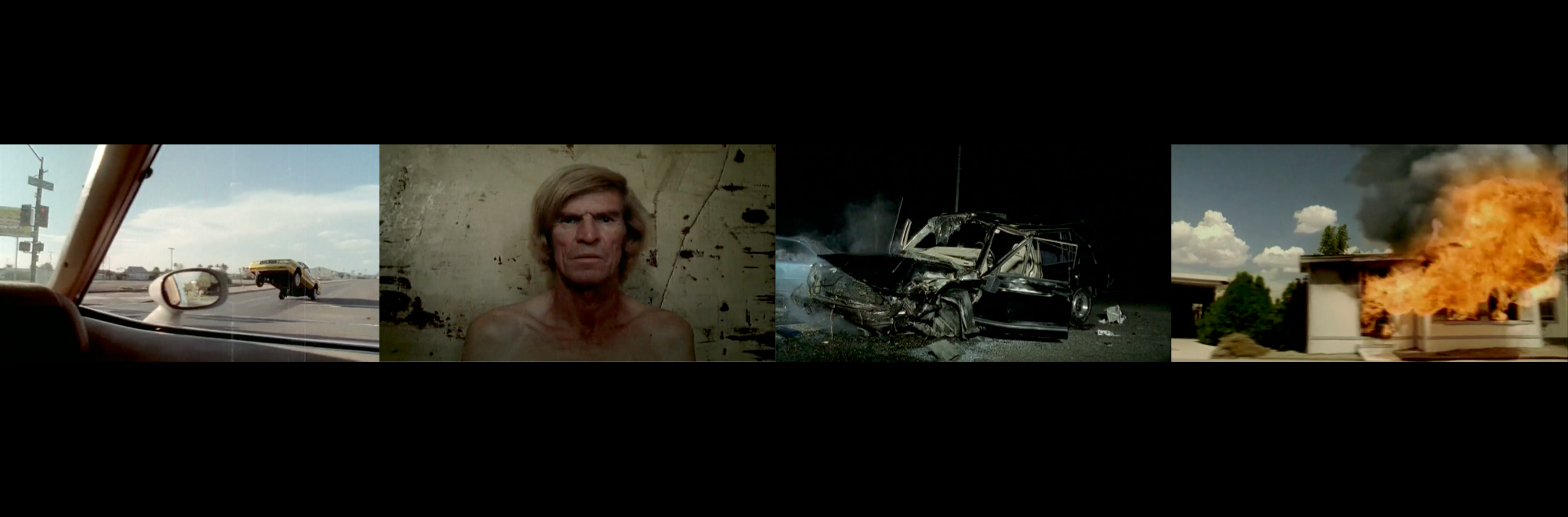
Paul Brazier (PB): “We wanted it to feel as though we had spent months travelling, discovering extraordinary people and happening upon extraordinary scenes. The camera would seem to catch things as they occurred. You would feel there was a much bigger world continuing beyond the edge of the frame.
Jonathan’s attention went into every detail: the casting, the clothes, even the size of the holes in the T-shirt the lead was wearing. Those decisions mattered because we were asking people to believe in him almost immediately. We had very little time to explain who he was. His appearance and behaviour had to do that work.
The shoot was scheduled for ten days. All of them were on the road, catching things on the fly. Apart from a few scenes. The burning house is a good example.
A front was built onto a house on an estate and rigged to go up in flames. My memory is that we only had about three goes at it. It worked beautifully. On screen, it feels like something astonishing you have happened to pass.
The lowriders were carefully arranged too. We linked up with locals who owned the cars and set everything up for the shot. We were told they were gang members and advised not to get too close. Filming as we drove past helped make it feel spontaneous: a strange little moment in somebody else’s life, glimpsed from a moving vehicle.
The intimidating man on the train. The seedy bar. Stampeding buffalo with light catching their eyes. All meticulously planned.
That was all part of Jonathan’s skill: knowing how much preparation it took to create the impression of an unplanned encounter.”
Planned happenstance. Fantastic, isn’t it?
If you enjoyed this article, you can subscribe for free to our weekly email alert and receive a regular curation of the best creative campaigns by creatives themselves.
Published on: