



Foster’s joins the brands tackling the ‘masculinity crisis’ sensitively
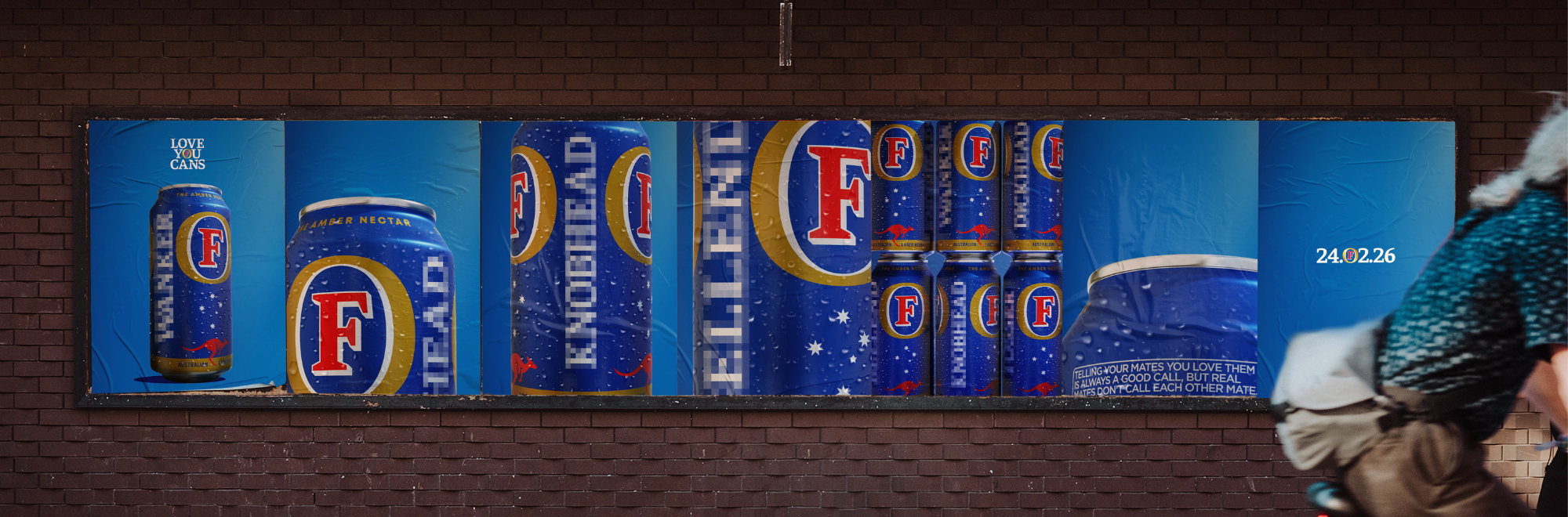
Foster’s ‘Love You Cans’ campaign is brash, bawdy and crude, and that’s the whole point.
A recent article by men’s club Round Table highlighted the shift many feel in what it means to be male in 2026, following a surge in membership even the organisation itself couldn’t predict. The article seems to have foreshadowed a spate of well-pitched campaigns this year that acknowledge the need to better male connection, without talking down to their audience.
In the beer world, where lads’ banter reigns supreme, Foster’s new ‘Love You Cans’ campaign perfectly encapsulates this trend. The brand turns to affectionate insults as a sort of Trojan horse for tough conversations.
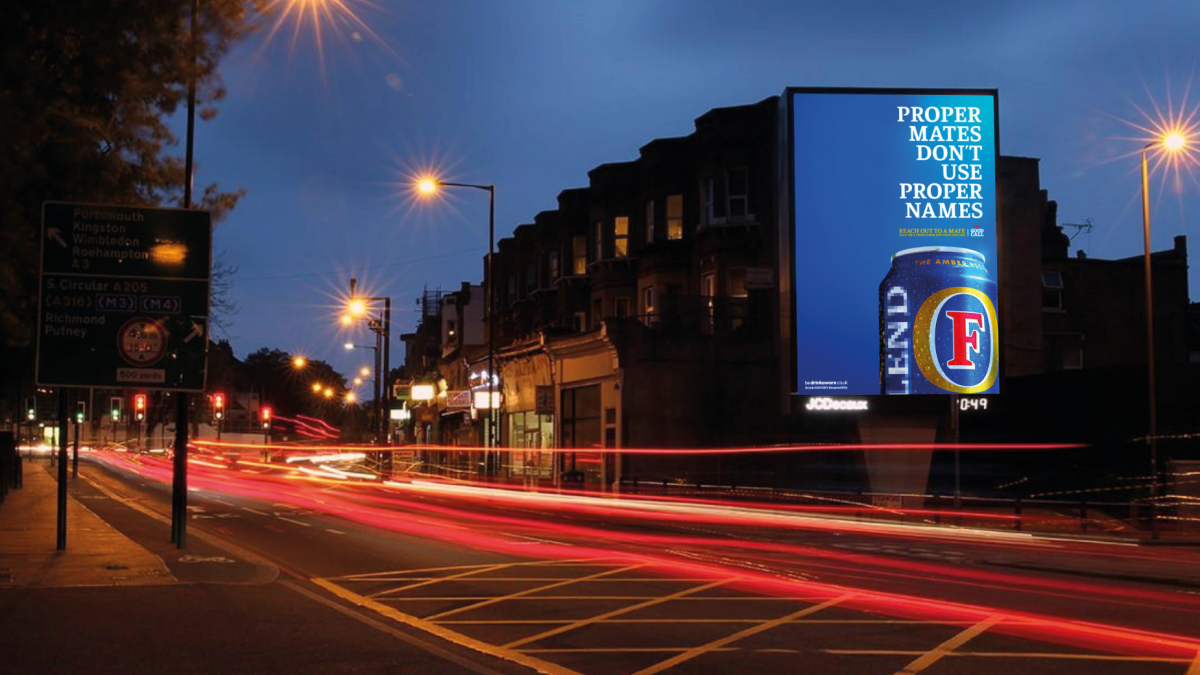 All images credit: Fosters campaign
Rooted in Publicis’ insight that 59% of millennial men express care through crude nicknames, the ads feature mates ribbing each other over pints, subtly nodding to deeper emotional bonds.
The Diversity Collective’s Rich Miles applauded the work, pointing out, “if it gets even one man talking amid rising suicide rates, isn’t that a win?”
The ad follows an effort in a similar vein by another beer brand, Beavertown, whose poignant ‘I Love You, Mate’ collab with CALM, is almost eerily similar in tone, albeit very British, rather than Antipodean, in tone.
The ads come at a time when, as the aforementioned Round Table article opines, men’s mental health challenges are starting to be genuinely acknowledged by the culture, and can be discussed in the same sentence as all the very valid issues raised this week and last for International Women’s Day.
Foster’s, like Beavertown, strikes the right nuance in its approach, underscoring the ‘IRL’ context in which tricky conversations arise. And, conversation seems to be the remedy many are aiming for, as seen in DSIT’s recent ad highlighting toxic culture.
Men, in general, probably need this sort of gentle nudging more than women, given our bent towards swallowing our problems and pretending everything is fine.
I’m just as much of a bellend as the next guy, but I’d wager that conversation is as good a place as any to start tackling the problems we face today.
If you enjoyed this article, you can subscribe for free to our weekly email alert and receive a regular curation of the best creative campaigns by creatives themselves.
Published on: