


Why print is surviving the AI age

Three recent campaigns by Ikea, Wizz Air and Surfrider Foundation prove the enduring power of a static printed image.
In the past month, we’ve seen a notable uptick in print, and three came along at once this week alone.
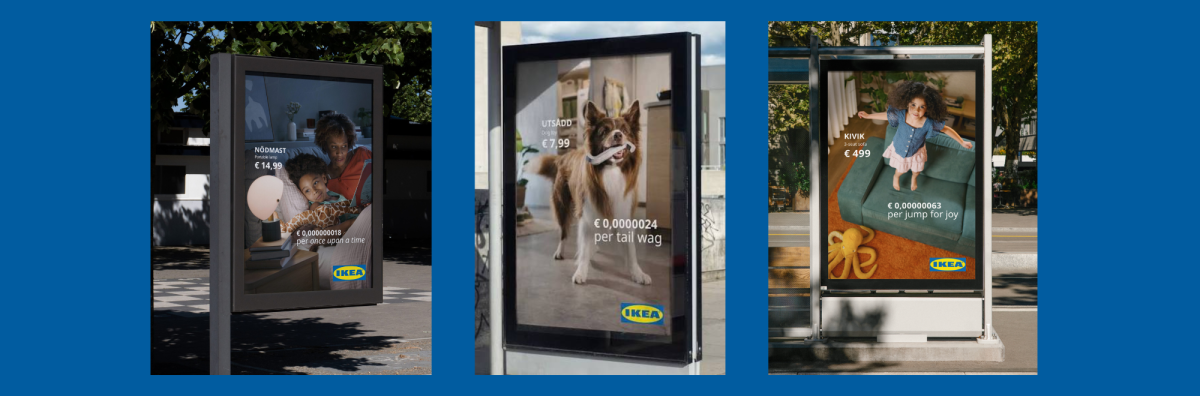
Ikea's emotional pricing campaign from Ogilvy Social.Lab Belgium played on its price-centric themes, Wizz Air dropped an unexpected depiction of romance in later life, and Surfrider Foundation's iconic environmental poster ‘What Goes In The Ocean Goes In You' proved persuasive and powerful.
What connects them is their understanding that great print advertising earns its relevance amid a spate of changing, attention-hungry mediums.
Ikea's campaign turns product pricing into an emotional pull, calculating the ‘cost’ of a child's bedtime story, a dog's tail wag, a butterfly sighting. The idea reframes affordability in emotional rather than economic terms.
The work feels very ‘Ikea’, transforming everyday domestic moments into something meaningful. Rather than discussing furniture, it discusses the context in which it's used.
Meanwhile, Wizz Air's billboard featuring an older couple kissing succeeds precisely because it depicts something seldom shown.
As Rich Miles, Diversity Standards Collective, observed: "One audience feels recognised. Everyone else pays attention." The image works because it disrupts expectations without feeling forced. It recognises that travel isn't exclusively the domain of twenty-somethings posting Instagram stories.
Then there's Surfrider Foundation's 'What Goes In The Ocean Goes In You'. The campaign transforms plastic waste into sushi. The visual joke lands instantly, but the implication stays with you longer.
We genuinely thought it was showing mouth-watering food at first, but then the realisation, linking pollution directly to human consumption, brought home the message that environmental damage has a personal consequence.
Why print still works
Print advertising is built to make you pause and take it in. But, notably, these ads all carry emotional weight.
Wizz Air makes you question why older romance feels unusual in advertising. Surfrider makes you realise that the meal on the plate might be connected to the rubbish in the sea. Ikea, meanwhile, plugs the emotional value of your purchases.
Print doesn’t rely on movement, sound or editing, so each element must earn its place.
Still craving some up-to-the-minute print innovation? Check out this World Children’s Day campaign and this little World Cup series. You’re welcome.
If you enjoyed this article, you can subscribe for free to our weekly email alert and receive a regular curation of the best creative campaigns by creatives themselves.
Published on: